
Exporting sourcing activities lets you download the eSourcing table as a CSV, for reporting, analysis or sharing outside oboloo.
The export contains every record and every column currently shown in the table, so what you download matches what you can see on screen.
When to Use This Feature
When reporting on sourcing pipeline or activity volumes.
When analysing sourcing data outside the platform.
When sharing a view of live and completed sourcing activities with colleagues who do not use oboloo.
When taking a point-in-time snapshot for a board pack or management report.
Step-by-Step Guide
1. Navigate to eSourcing
Open eSourcing from the main menu.
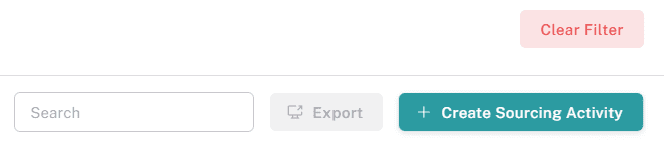
2. Click Export
Click the Export button above the eSourcing table.
The file downloads to your device in CSV format.
What the Export Contains
The export includes all records and all columns currently available in the eSourcing table.
It does not include supplier responses, questionnaire answers, pricing submissions, scoring, or documents attached to an activity. Those live within each sourcing record. To analyse supplier pricing, use Financial Analysis of Supplier Pricing, and for evaluation results use Supplier Scoring Analysis and Insights.
If You Cannot Export
Export is controlled by the Export permission on your user role, set per module. If the Export button is missing or disabled, your role does not have export rights for eSourcing.
Contact your System Administrator or Superuser to request access.
Once granted, retry the steps above.
See Viewing Your Access Rights to check your own permissions, and User Roles & Access Rights (RBAC) for how they are configured.
Key Considerations & Best Practices
✅ Filter before you export — A filtered table produces a filtered export, which is usually more useful than the whole pipeline.
✅ Handle exported data carefully — Sourcing data can include commercially sensitive supplier and pricing information. Once exported it sits outside oboloo's access controls, so treat it in line with your organisation's security policy.
✅ Note the date — An export is a snapshot. Label it clearly if you are circulating it, so nobody works from stale figures.
Additional Resources
📌 Related User Guides:
Exporting, Sorting and Filtering Tables – Refining a table before exporting.
Customising Table Views – Choosing which columns appear, and therefore which are exported.
Navigating the Sourcing Management Home Page – The eSourcing table and dashboard.
User Roles & Access Rights (RBAC) – Configuring export permissions.
Viewing Your Access Rights – Checking your own permissions.